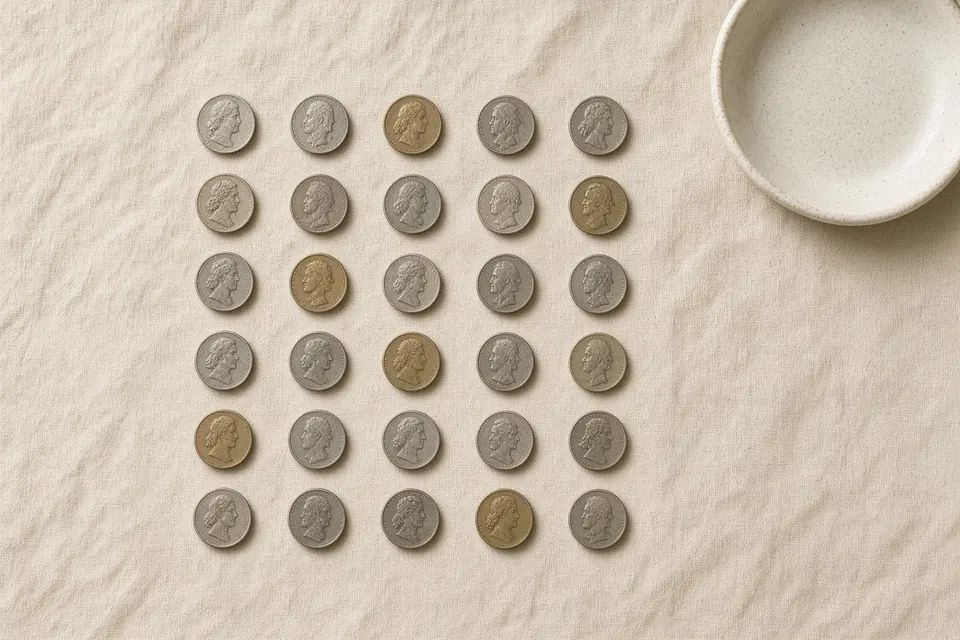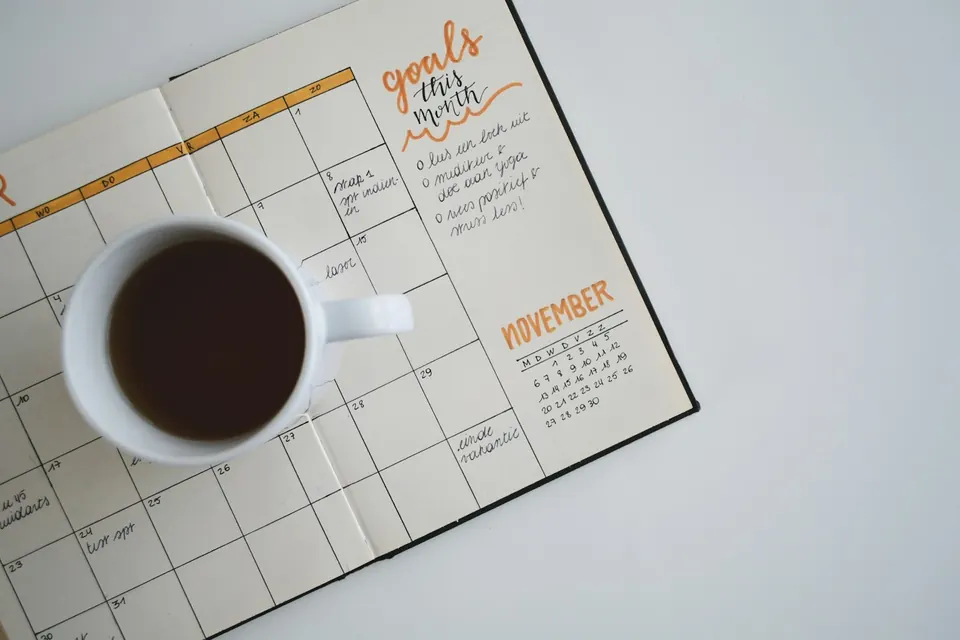
No Spend November is a one-month challenge with a simple rule: you keep paying for the things you already owe, and you pause almost everything else. Groceries stay. Rent stays. The car payment stays. What stops is the optional spending that usually sneaks out through coffee runs, marketplace checkouts, and "just this once" shopping trips.
People search for no spend November rules every fall because the calendar is about to get expensive. The National Retail Federation's 2025 holiday survey found that consumers planned to spend about $890 per person on gifts, food, decorations, and other seasonal items, and 42 percent planned to start before November. A no-spend month is not about being miserable through the holidays. It is about clearing space so December does not land on a credit card.
This guide covers what No Spend November actually means, a set of rules you can stick to, what to put on the allowed list, how to handle Thanksgiving and early holiday shopping, a sample month with real dollar amounts, and what to do with the money you do not spend. Free tracker: the No-Spend Challenge Calendar (PDF).
What is No Spend November?
No Spend November (sometimes called No Buy November) is a short spending freeze on discretionary purchases. You decide the rules before the month starts, write down what is allowed, and treat everything else as off-limits until December 1.
It is not the same as a 30-day savings challenge. A savings challenge asks you to move a set amount into savings every day or week. A no-spend challenge asks you to stop optional spending so that money never leaves the account in the first place. Many people run both: freeze the extras in November, then point the leftover cash at a named savings goal.
It is also not a punishment diet for your budget. If you already use a tight-month plan from How to Create a Budget When Money Is Tight, No Spend November is a sharper version of the same idea: needs first, wants paused, savings named.
Why November is a good month for it
November sits between Halloween clearance and the main holiday shopping stretch. NRF defines the holiday retail season as November 1 through December 31 and forecast 2025 holiday sales between $1.01 trillion and $1.02 trillion. That is national retail activity, not your personal target, but it explains why your inbox fills with deals the moment the calendar flips.
Two practical reasons to run the challenge now:
- You can test your rules before Black Friday and Cyber Monday pressure peaks.
- Money you do not spend in November can fund a holiday sinking fund or knock down a card balance before gift season.
Credit makes the stakes clearer. The Federal Reserve's G.19 consumer credit report (release of October 7, 2026) puts the average interest rate on credit card accounts assessed interest at about 22 percent. At that rate, every $1,000 you carry costs roughly $18 a month in interest. A no-spend month that keeps even a few hundred dollars off a card is doing real work.
No Spend November rules that people actually keep
Vague rules fail by day four. Write yours down. Here is a starter set that covers most households:
- Pay every bill you already owe: rent or mortgage, utilities, insurance, minimum debt payments, childcare, and transportation you need for work.
- Buy groceries and household essentials you will use this month. No stockpiling "because it's on sale" unless it replaces something you already planned to buy.
- Pause clothing, home decor, gadgets, marketplace browsing, and nonessential subscriptions you can cancel or freeze without a fee.
- Eating out and delivery are off unless they are on your short exception list (more on that below).
- Gifts for November birthdays or host gifts can stay if you set a dollar cap before the month starts.
- If you break a rule, write it down and continue. Do not scrap the whole month.
The last rule matters. A no-spend challenge is a practice month, not a purity test. One coffee does not erase twenty-nine careful days.
Build an allowed list before November 1
Open a notes app or a one-page sheet and list what is allowed. Keep it short. A useful allowed list often looks like this:
- Housing, utilities, phone, internet
- Groceries and basic toiletries
- Gas, transit pass, or necessary car costs
- Medications, medical copays, and pet food
- Debt minimums and any extra payment you already planned
- One pre-agreed exception category with a hard cap (for example, $40 for a birthday gift)
If you are not sure where your money goes today, spend the last week of October with the CFPB's free spending tracker. Sort a few weeks of transactions into categories. The categories that keep surprising you are the ones the challenge needs to name.
A short exception list beats a long one
Pick zero to three exceptions, not twelve. Examples that work:
- One takeout night for a planned date or family reset, capped at a dollar amount
- Kids' school event fees you cannot skip
- A car repair that would be unsafe to delay
Do not put "anything on sale" on the list. A sale is a marketing calendar, not a need.
What counts as spending (and what does not)
People get stuck on edge cases. Use these defaults:
- Using a gift card you already own for something on the allowed list is fine. Buying a new gift card is not.
- Buying with store credit or "buy now, pay later" still counts as spending.
- Free events, library holds, walking, and cooking from what you already have do not count as spending.
- Replacing a broken essential (work shoes with a hole, a phone charger that failed) can sit on the exception list if you set a cap.
- Moving money to savings is not spending. Paying down debt above the minimum is not a no-spend violation; it is the point for a lot of people.
Thanksgiving, Black Friday, and early holiday shopping
This is where most No Spend November plans break, so decide it in October.
Thanksgiving dinner
Food for a holiday meal is still food. Put Thanksgiving groceries inside the grocery budget, not outside the challenge. Set the dinner budget as a number (for example, $80 or $120 for the household) and shop from a written menu. Hosting does not require new serving dishes, a tablescape haul, or same-day specialty runs for three kinds of pie.
Black Friday and Cyber Monday
If your challenge is a full freeze, the honest move is to skip the sales events. If your real goal is a cheaper December, a narrower rule works better: no Black Friday browsing except for items already on a written holiday list with prices researched in October. NRF's survey found 54 percent of early shoppers said they start early to spread out the budget. Spreading the budget is smart. Impulse cart-filling because an email said "today only" is the opposite.
A practical middle path:
- By October 31, write a holiday gift list with a total cap.
- During November, buy from that list only, and only if the price is at or below your pre-written target.
- Everything not on the list waits until December or gets cut.
That version is really a "no unplanned spend November," and it still catches most of the damage.
A sample No Spend November with dollar amounts
Numbers below are an illustration for a household with $3,400 take-home in November, not a recommendation for your rent or your city.
| Category | Planned | Challenge rule |
|---|---|---|
| Rent and utilities | $1,450 | Allowed |
| Groceries (including Thanksgiving) | $520 | Allowed, with a written dinner cap of $100 inside this line |
| Gas and transit | $160 | Allowed |
| Insurance and minimum debt payments | $380 | Allowed |
| Phone and internet | $120 | Allowed |
| Eating out and coffee | $0 | Paused (was about $180 last month) |
| Shopping and marketplace | $0 | Paused (was about $140 last month) |
| Streaming add-ons | $0 | Paused one unused service ($15) |
| Holiday sinking fund transfer | $200 | Allowed — money moved to savings, not spent |
| Extra debt payment | $150 | Allowed |
| Buffer / miscellaneous allowed | $70 | Only true essentials |
| Left unassigned on purpose | $350 | Stays in checking as a cushion |
In this illustration, pausing eating out, shopping, and one subscription frees about $335 compared with the prior month. Of that, $200 goes to a holiday sinking fund and $150 to an extra debt payment. November stops funding December's regret without skipping bills or groceries.
If you like envelopes for the categories that tend to overrun, cash stuffing for beginners shows how to run groceries and gas in cash while bills stay electronic. A no-spend month and envelopes pair well because the empty envelope is hard to argue with.
What to do instead of spending
A challenge fails when the only plan is "don't buy things." Replace the habit:
- Cook from the freezer and pantry two nights a week before you grocery shop again.
- Use the library holds list the way you used to use a shopping wishlist.
- Walk, stretch, or meet a friend for a free park meetup instead of a default mall trip.
- Unsubscribe from retailer emails for thirty days, or filter them to a folder you open once a week.
- When you want to buy something, add it to a December list with the date you wanted it. Revisit the list on December 1. Most items will look less urgent.
If overspending is usually emotional rather than organizational, see How to Stop Overspending Without Feeling Restricted. No Spend November is the short experiment; that article is the ongoing fix.
Where the money you do not spend should go
Decide the destination on October 31. Otherwise the "savings" just raises your checking balance until a December sale finds it.
- No emergency cushion yet: send the freed-up cash to a starter fund. The Federal Reserve's 2024 household survey found that 63 percent of adults could cover a hypothetical $400 emergency expense entirely with cash or its equivalent, which means more than a third could not. How to Build a $1,000 Emergency Fund is the step-by-step.
- Emergency fund is fine but December will be expensive: fill a holiday sinking fund. Divide what you still need by the weeks left and automate the transfer.
- High-interest card debt: make an extra payment. At roughly 22 percent average assessed interest on cards, paying the card often beats parking the same money in a low-yield account for one month.
- Want a habit after November: roll into a flat 30-day savings challenge in December at $5 or $10 a day.
Keep the money in an insured deposit account at a bank (FDIC) or credit union (NCUA), not in a drawer. A no-spend month that turns into a cash stash under the mattress trades one problem for another.
If you slip mid-month
You will probably slip. Treat it like a budget variance, not a moral failure.
- Write what you bought and what triggered it (boredom, social pressure, a targeted ad, a bad day).
- Move the same amount to your challenge destination the next payday if you can, without skipping rent or groceries.
- Tighten one rule for the next week instead of rewriting the whole month.
- Keep going through November 30.
A month with three slips and twenty-seven careful days still changes your December. A month you abandon on November 6 does not.
No Spend November vs other money challenges
| Challenge | Main rule | Best when |
|---|---|---|
| No Spend November | Pause discretionary spending for the month | You overspend on wants and holiday season is coming |
| Flat 30-day savings challenge | Move $2, $5, or $10 a day into savings | You need a savings habit more than a spending freeze |
| 52-week money challenge | Save an increasing or flat weekly amount for a year | You want a year-long structure after November |
| Cash stuffing | Spend variable categories from labeled envelopes | Card swipes are the leak, and you want a tactile limit |
You can combine them. Example: No Spend November for discretionary categories, cash envelopes for groceries and gas, and a $150 flat savings challenge funded by what the freeze frees up.
A seven-day setup before November 1
- Day 1: Print or download the no-spend calendar and write your end date.
- Day 2: List bills and due dates. Confirm minimum debt payments are covered.
- Day 3: Write the allowed list and the exception list with dollar caps.
- Day 4: Unsubscribe from three retail email lists and delete one shopping app from your phone.
- Day 5: Set the destination for freed-up money (emergency fund, holiday sinking fund, or extra debt payment) and automate a transfer for November 30 or each payday.
- Day 6: Plan seven dinners from food you already have. Make the Thanksgiving menu and grocery list.
- Day 7: Tell anyone who budgets with you what the rules are, so a partner's Target run does not become a surprise fight.
If the month ahead already looks short before you pause any wants, fix the order of operations first with the monthly budget calculator and the tight-month guide linked above. A no-spend challenge cannot create income you do not have. It can only stop optional leaks.
After November 30
On December 1, do a thirty-minute review:
- Total what you did not spend in the paused categories, using your bank and card statements.
- Confirm the money reached the destination you named.
- Keep one or two rules permanently (for example, no marketplace browsing on your phone, or a 48-hour wait on nonessentials).
- Rewrite the holiday gift list against the cash you actually have, not the sales you wish you could join.
No Spend November works when it is specific, written, and attached to a destination. The bills, grocery list, exception caps, and payday transfer are not optional.
Questions readers ask
What is No Spend November?
A one-month challenge where you keep paying required bills and groceries but pause discretionary spending such as eating out, clothes, gadgets, and impulse online orders.
What are the basic No Spend November rules?
Pay existing bills, buy only planned groceries and essentials, pause optional shopping and most eating out, write a short exception list with dollar caps, and keep going if you slip once.
Can I grocery shop during No Spend November?
Yes. Groceries and basic household essentials stay on the allowed list. What usually stops is convenience food runs, duplicate pantry purchases, and non-food cart add-ons.
Does Thanksgiving dinner break a no-spend challenge?
No, if you fund it from the grocery budget with a written cap. New decor, extra specialty gadgets, and unplanned host gifts are what usually break the month.
Can I shop Black Friday during No Spend November?
Only if your written rules allow purchases from a pre-made holiday list at or below a target price. Otherwise, skip the sales events and keep the freeze intact.
Is No Spend November the same as a no-buy or a savings challenge?
No-buy and no-spend are usually the same idea. A savings challenge is different: you move a set amount into savings on a schedule, whether or not you also freeze spending.
What should I do with the money I do not spend?
Pick a destination before the month starts: starter emergency fund, holiday sinking fund, or an extra payment on high-interest debt. Leave it in an insured deposit account, not as loose cash.
Sources
- National Retail Federation, Consumers to Spend Second-Highest Amount on Record (holiday survey, October 2025)Consumers planned $890.49 per person on holiday gifts and seasonal items; 42 percent planned to start before November; 54 percent of early shoppers cited spreading out the budget.
- National Retail Federation, NRF Expects Holiday Sales to Surpass $1 Trillion for the First Time in 2025Holiday retail sales forecast of $1.01–$1.02 trillion for Nov. 1–Dec. 31, 2025; NRF holiday definition excludes auto dealers, gas stations, and restaurants.
- Federal Reserve, Consumer Credit G.19 (release of October 7, 2026)Average interest rate on credit card accounts assessed interest near 22 percent in the latest reported months.
- Federal Reserve, Economic Well-Being of US Households in 2024 (fact sheet, May 2025)63 percent of adults would cover a hypothetical $400 emergency expense exclusively with cash or its equivalent.
- Consumer Financial Protection Bureau, Spending tracker (Your Money, Your Goals)Free worksheet for sorting recent spending into categories before setting challenge rules.
- FDIC, Understanding Deposit InsuranceDeposit insurance covers deposit accounts at FDIC-insured banks, within coverage limits.
SaveNests Editorial Desk
The SaveNests Editorial Desk writes practical explainers for US households. Drafts are researched from public sources such as the Bureau of Labor Statistics, the Federal Reserve, the Consumer Financial Protection Bureau, the FDIC, and the IRS. The desk is not a registered investment adviser, certified financial planner, certified public accountant, or law firm, and it does not provide personal financial advice.
Free printable
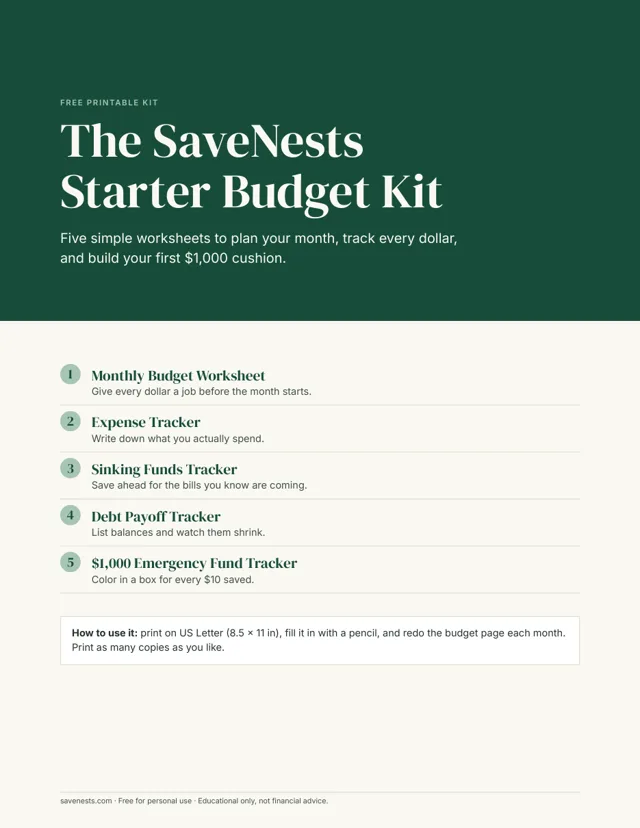
Get the free Starter Budget Kit
A 6-page printable PDF: monthly budget worksheet, expense tracker, sinking funds tracker, debt payoff tracker, and a $1,000 emergency fund tracker. Join the SaveNests letter to get it, plus an occasional note when a new guide is ready. Unsubscribe any time.