Most meal plans fall apart by Wednesday. They assume you'll cook a new recipe every night, buy seven sets of ingredients, and never get home late. Then a long shift happens, the plan gets skipped, the food you bought for it goes soft in the fridge, and you pay for dinner twice.
Meal planning on a budget works better when you plan backward: decide what the week can cost, mark the nights you won't cook, use what's already in the house, and repeat a few cheap meals on purpose. This guide walks through that order, with real price data so the numbers aren't guesswork.
What a budget meal plan should cost
The most useful benchmark comes from the USDA. Every month it prices four food plans, from Thrifty to Liberal, that cover a nutritious diet with all meals and snacks made at home. Here are the weekly costs for a few common households in the September 2026 report, issued in October 2026.
| Household | Thrifty | Low-Cost | Moderate-Cost |
|---|---|---|---|
| One woman | $70 | $77 | $93 |
| Couple (woman and man) | $145 | $151 | $186 |
| Family of four (two adults, kids 6–8 and 9–11) | $236 | $260 | $321 |
The family-of-four Thrifty figure, $236.30 a week or $1,024.00 a month, is USDA's own reference family. The other cells add up USDA's individual costs and apply its suggested adjustments: add 20 percent for a one-person household and 10 percent for two. USDA prices each person as if they live in a four-person home, which is why smaller households get a bump.
Spread over three meals a day, the Thrifty plan for a family of four works out to about $2.81 per person per meal, and that includes snacks. It's tight, but it shows what home cooking from basic ingredients can cost. If you spend well above the Moderate-Cost plan for your household, meal planning has a lot of room to help.
For a sense of what people actually spend, the Bureau of Labor Statistics found the average US household spent $6,224 on food at home in 2024, about $120 a week, plus $3,945 on food away from home, about $76 a week. Those are averages across all household sizes, not targets.
Step 1: Set one weekly grocery number
A meal plan without a dollar limit is just a wish list. Pick one number for the week before you choose a single recipe.
- Start with what you really spent. Add up the last four weeks of grocery receipts or card charges and divide by four.
- Compare it with the USDA table. If you're far above the Moderate-Cost plan, set this week's number partway between the two, not at the Thrifty level all at once.
- Include household basics only if they come out of the same budget line. Toilet paper and dish soap can eat a surprising share of a grocery trip.
- Write the number at the top of your plan, so every meal on the page has to fit under it.
If the whole month is tight, the grocery line is usually the most flexible one you have. How to Save Money on a Low Income covers what to protect first when money runs short, including SNAP and other food help.
Step 2: Mark the nights you won't cook
This is the step most meal plans skip. Look at the week ahead and circle the nights you know you won't cook: late shifts, practice nights, a birthday dinner, the evening you're always too tired. Plan those nights first.
- Leftover nights. Plan to eat Monday's extra portions on Tuesday or Wednesday.
- Ten-minute nights. Eggs and toast, quesadillas, pasta with a jar of sauce and frozen vegetables, or a freezer meal you made earlier.
- Planned takeout. If you're going to order in on Friday anyway, put it in the plan with a dollar amount. A planned $30 order beats an unplanned $50 one.
Eating out is getting more expensive faster than cooking. In the 12 months to September 2026, prices for food away from home rose 3.5 percent, including 3.8 percent at full-service restaurants, while grocery prices rose 1.8 percent. Every takeout night you turn into a ten-minute home meal saves a little more than it did a year ago.
Step 3: Shop your own kitchen first
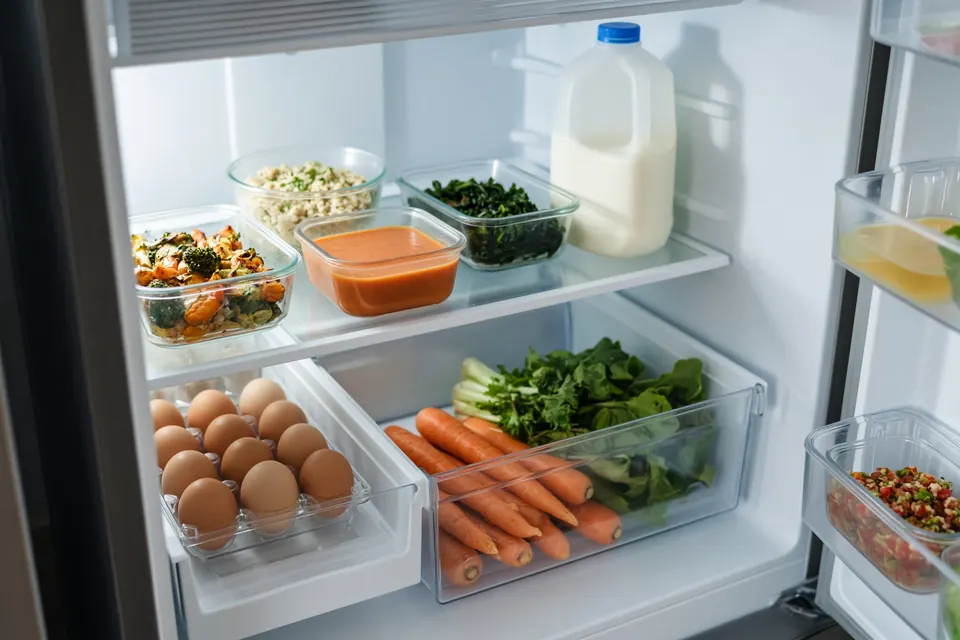
Before you write a grocery list, open the fridge, freezer, and pantry. Write down anything that needs to be used soon and anything you have a lot of. Those items should be the starting point for two or three meals this week.
The USDA estimates that food waste in the United States is 30 to 40 percent of the food supply. Its Economic Research Service put food loss at the retail and consumer levels at 31 percent in 2010, about 133 billion pounds worth $161 billion. Some of that happens before food reaches you, but food you already paid for is the cheapest ingredient you have.
Step 4: Build the week around cheap anchor meals
You don't need seven different dinners. Pick three or four anchor meals your household will actually eat, and repeat them. Cheap anchors usually share a few things: a low-cost base like rice, pasta, potatoes, beans, or oats; one protein bought in a larger package; and vegetables that keep, like carrots, cabbage, onions, or frozen bags.
Prices don't all move together, so it helps to know what's gotten cheaper or pricier lately. Here's how some common meal-plan staples changed over the 12 months to September 2026, according to the BLS Consumer Price Index.
| Item | Price change |
|---|---|
| Eggs | −20.6% |
| Butter | −10.3% |
| Cheese | −3.0% |
| Pork | −0.7% |
| Chicken | −0.6% |
| Potatoes | +1.1% |
| Frozen vegetables | +2.6% |
| Dried beans, peas, and lentils | +3.3% |
| Uncooked ground beef | +5.4% |
| Rice | +7.1% |
A percentage change doesn't tell you the price per serving, and a pound of dried beans still makes far more meals than a pound of ground beef. Use the table to decide where to swap, not what to eat. For example, a chili or taco filling that's half beef and half beans takes some of the sting out of beef prices. Comparing unit prices on the shelf is covered in 25 Realistic Ways to Save on Groceries.
A sample budget week (no recipes required)
Here's one way a week can come together using two cook-once nights, one pantry night, and planned leftovers. Swap in meals your household already likes.
- Sunday: roast a whole chicken or a tray of chicken thighs with potatoes and carrots. Cook extra.
- Monday: chicken and rice bowls with the leftover chicken and a bag of frozen vegetables.
- Tuesday: a big pot of bean chili or lentil soup. Freeze two portions.
- Wednesday: leftover chili over baked potatoes.
- Thursday: pantry night, like fried rice with eggs and whatever vegetables need using.
- Friday: planned takeout, or a frozen-pizza night, with the dollar amount written in.
- Saturday: breakfast for dinner (eggs, toast, oatmeal or pancakes), or anything left in the fridge.
Breakfasts and lunches can follow the same logic. One or two breakfasts on repeat (oats, eggs, toast) and lunches made from dinner leftovers cut most of the planning work.
Step 5: Cook once, eat twice, and store it safely
Planned leftovers are where a budget meal plan saves real money and time. They only help if they're safe to eat, so follow USDA's Food Safety and Inspection Service guidelines:
- Refrigerate leftovers within 2 hours of cooking (1 hour if it's above 90°F).
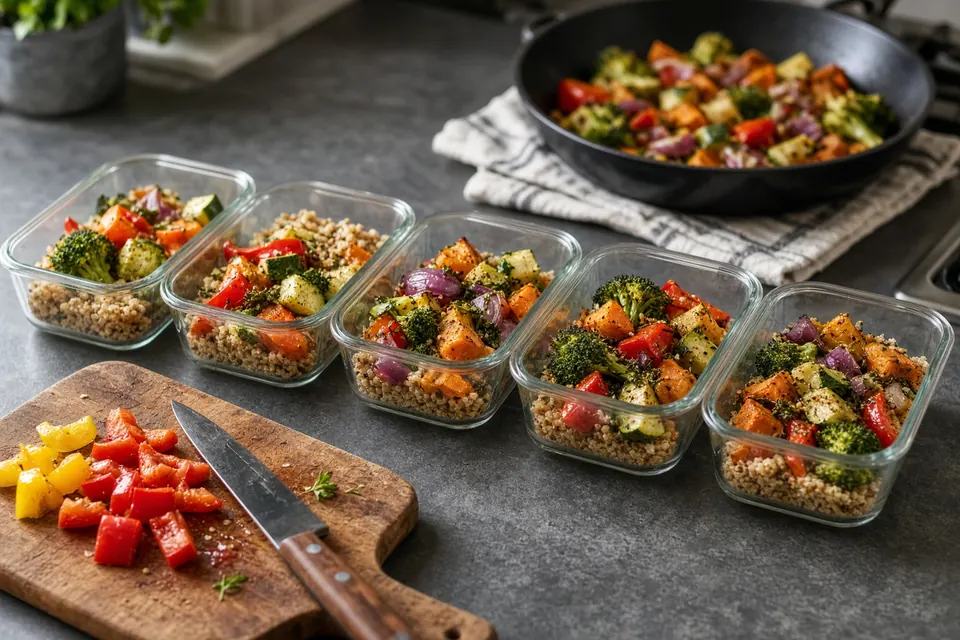
- Divide big batches into shallow containers so they cool quickly.
- Eat refrigerated leftovers within 3 to 4 days, or freeze them. Frozen leftovers are best within 3 to 4 months for quality.
- Reheat leftovers to 165°F, and bring soups, sauces, and gravies to a rolling boil.
The 3-to-4-day window shapes the plan: something cooked on Sunday should be eaten by Wednesday or Thursday, or go into the freezer on Monday. Label containers with the date, because nobody remembers.
Step 6: Write the list by store section, then check it against the number
Once the meals are set, write a grocery list grouped the way your store is laid out (produce, meat, dairy, frozen, pantry), not by recipe. You'll walk the store once, see duplicates before you buy them, and spend less time in aisles you didn't need.
- Cross off anything your kitchen inventory already covers.
- Estimate each item's price from your last receipt or the store's app.
- If the total is over your weekly number, swap the priciest protein, drop a recipe that needs a one-time ingredient, or turn one cooked night into a leftover night.
- Shop once, with the list. A second midweek trip is where impulse buys tend to happen.
If you like planning on paper, the free Grocery Budget & Meal Plan Sheet (PDF) has a weekly budget box, a seven-day meal grid, and a shopping list split by store section, which is exactly the order above.
Meal planning on a budget for a family
Feeding kids adds a few extra problems: picky eaters, school lunches, and growing appetites. USDA's costs rise with age. In the Thrifty plan, a child aged 6 to 8 costs $48.30 a week and a boy aged 14 to 19 costs $75.30, more than an adult man aged 20 to 50 at $73.60. Plan for teenagers to eat like adults.
- Build meals from parts. A taco or rice-bowl night lets everyone assemble their own plate from the same ingredients, so you aren't cooking two dinners.
- Repeat a short list of lunches. Two or three lunchbox options on rotation means a shorter, cheaper list.
- Let kids pick one meal a week from your anchor list. It cuts down on complaints and wasted plates.
Groceries are only one line in a family's month. How to Budget for a Family of Four shows where food fits next to housing, childcare, and transportation.
Holiday weeks: plan around the big meal
November and December weeks don't look like normal ones. A Thanksgiving or Christmas dinner can take most of a week's grocery budget on its own, so plan the days around it instead of on top of it.
- Make the days before the holiday pantry and freezer nights, so the big shopping trip is the only one that week.
- Plan the leftovers before you cook: turkey or ham goes into soup, sandwiches, and fried rice, and portions go into the freezer within the 3-to-4-day window.
- Keep the holiday meal in its own budget line so it doesn't quietly wipe out the next week's groceries.
For the holiday meal itself, Thanksgiving on a Budget walks through a full dinner for 10, including how much turkey to buy.
When the plan breaks (it will)
Some weeks you'll skip a cooking night or forget the chicken in the fridge. That usually means the plan had too many cooked nights for the week you actually had, not that meal planning doesn't work for you.
- Move the ingredients forward. If Tuesday's chili didn't happen, make it Wednesday and skip Wednesday's meal.
- Freeze what won't get used in time, before it goes bad.
- Next week, plan one fewer cooked night and one more ten-minute night.
- Keep one backup meal in the pantry or freezer for the night you'd otherwise order in. Replace it after you use it.
If takeout keeps winning, the problem may be the spending pattern, not the menu. How to Stop Overspending Without Feeling Restricted shows how to give eating out a set number so it stops blowing up the month.
Budget meal planning checklist
- Set one weekly grocery number from your real spending, checked against the USDA plans.
- Circle the nights you won't cook and plan leftovers, ten-minute meals, or planned takeout for them.
- Inventory the fridge, freezer, and pantry, and use what needs eating first.
- Choose three or four cheap anchor meals and repeat them.
- Cook extra on purpose, refrigerate within 2 hours, and eat or freeze leftovers within 3 to 4 days.
- Write the list by store section, price it, and trim it to fit the number.
- Shop once, and keep one backup meal for the night the plan breaks.
Questions readers ask
How do I start meal planning on a budget?
Set a weekly grocery number first, then mark the nights you won't cook. Check what's already in your fridge, freezer, and pantry, build three or four cheap meals around it, cook extra for leftovers, and write a shopping list grouped by store section. Price the list and trim it until it fits the weekly number.
How much should a family of four spend on groceries a week?
USDA's September 2026 food plans put a family of four (two adults aged 20 to 50 and children aged 6 to 8 and 9 to 11) at $236.30 a week on the Thrifty plan, about $260 on the Low-Cost plan, and about $321 on the Moderate-Cost plan. All four USDA plans assume every meal and snack is made at home.
How much should one person spend on groceries a week?
For one woman aged 20 to 50, USDA's September 2026 Thrifty plan works out to about $70 a week after the 20 percent adjustment USDA suggests for one-person households, and the Moderate-Cost plan to about $93. Men's costs are higher, and your own number depends on what you eat and where you shop.
What are the cheapest meals to put in a budget meal plan?
Meals built on a low-cost base like rice, pasta, potatoes, beans, lentils, or oats, with a small amount of protein and vegetables that keep, such as carrots, cabbage, onions, or frozen bags. Eggs got cheaper over the past year, falling 20.6 percent in the 12 months to September 2026, while rice rose 7.1 percent and ground beef 5.4 percent.
How long can I keep meal-prep leftovers?
USDA's Food Safety and Inspection Service says leftovers can be kept in the refrigerator for 3 to 4 days or frozen for 3 to 4 months for best quality. Refrigerate them within 2 hours of cooking (1 hour above 90°F), and reheat to 165°F.
Is meal planning really cheaper than eating out?
Usually, yes, and the gap is growing. Restaurant prices rose faster than grocery prices over the past year: food away from home was up 3.5 percent in the 12 months to September 2026, compared with 1.8 percent for food at home. The bigger saving comes from replacing unplanned takeout nights with leftovers or ten-minute meals.
Sources
- USDA Food and Nutrition Service, Official USDA Thrifty Food Plan: U.S. Average, September 2026 (issued October 2026)Reference family of four $236.30 a week, $1,024.00 a month; female 20–50 $58.60/week; male 20–50 $73.60/week; child 6–8 $48.30/week; male 14–19 $75.30/week; household-size adjustments (+20% one person, +10% two, +5% three); all meals and snacks prepared at home.
- USDA Food and Nutrition Service, Official USDA Food Plans: Cost of Food at Home at Three Levels, U.S. Average, September 2026Weekly costs, female 19–50: Low-Cost $63.80, Moderate $77.60; male 19–50: Low-Cost $73.30, Moderate $91.90; child 6–8: Low-Cost $60.40, Moderate $70.30; child 9–11: Low-Cost $62.60, Moderate $80.70.
- U.S. Bureau of Labor Statistics, Consumer Price Index, September 2026, Table 2 (released October 14, 2026)12 months to September 2026, not seasonally adjusted: food at home +1.8%; food away from home +3.5%; full-service meals +3.8%; eggs −20.6%; butter −10.3%; cheese −3.0%; pork −0.7%; chicken −0.6%; potatoes +1.1%; frozen vegetables +2.6%; dried beans, peas, and lentils +3.3%; uncooked ground beef +5.4%; rice +7.1%.
- U.S. Bureau of Labor Statistics, Consumer Expenditures 2024 (news release, December 19, 2025)Average consumer unit, 2024: food at home $6,224; food away from home $3,945.
- U.S. Department of Agriculture, Food Waste FAQsFood waste estimated at 30–40% of the U.S. food supply; ERS estimate of 31% food loss at retail and consumer levels, about 133 billion pounds and $161 billion in 2010.
- USDA Food Safety and Inspection Service, Leftovers and Food SafetyRefrigerate within 2 hours (1 hour above 90°F); shallow containers; refrigerator 3–4 days, freezer 3–4 months; reheat to 165°F; bring sauces, soups, and gravies to a rolling boil.
Mohamed Ouhammouche
Mohamed Ouhammouche founded and runs SaveNests, a budgeting site that helps beginners build simple budgets. This guide was reviewed by the SaveNests Editorial Desk under the editorial and fact-checking policies.
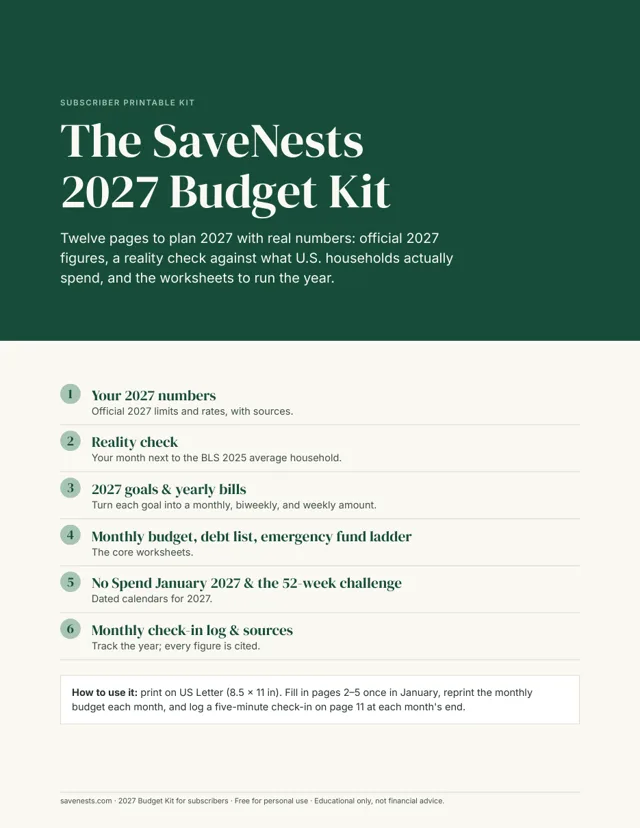
Free for subscribers
Get the 2027 Budget Kit
A 12-page printable PDF: official 2027 numbers (HSA limits, the 3.6% COLA), your month next to the BLS average household, goals and yearly bills, a monthly budget, a debt list, an emergency fund ladder, a No Spend January 2027 calendar, and dated 52-week challenge charts. Every figure is cited.